A free science diagram maker for teachers
Water cycle, plant cell, photosynthesis, rock cycle, states of matter, and the solar system — for preschool through college.
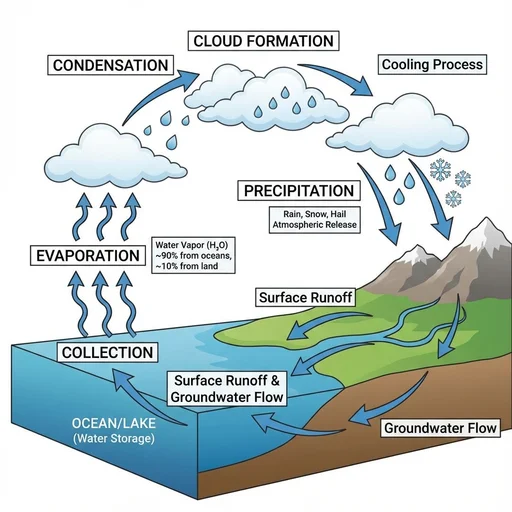
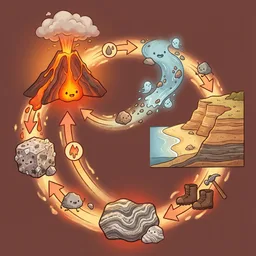
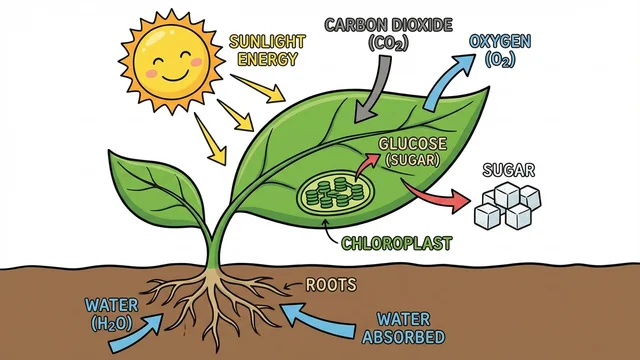
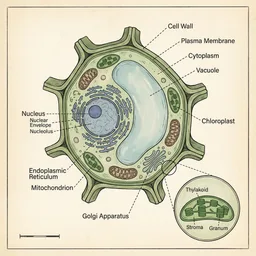
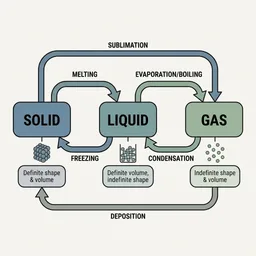
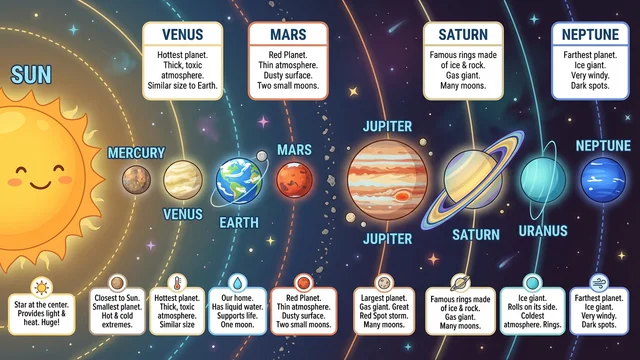
A free science diagram maker is only useful if the figure can sit in front of the students you actually have. That group is wider than a high-school biology section. TeachFigs is for preschool and early childhood, elementary, middle school, high school, college, tutors, and homeschool. The samples on this page are a water cycle, a plant cell, photosynthesis, the rock cycle, states of matter, and a solar-system study guide.
You describe the diagram. The draft comes back as a teaching figure, not as a pile of icons you have to place yourself. Styles in the product include worksheet, coloring book, K-12 textbook, diagram, concept map, illustrated, anime, comic, and higher ed. Coloring-book and illustrated styles are the ones to name when the class is young. Higher ed is there when the class is not. The free tier is 10 credits when you sign up, high-resolution export, every style, and no credit card. Starter is $8 a month for 30 generations. Lab is $24 a month for 100 generations. Teams and University are coming soon, so a free account is a teacher account, not a school-wide license.
The pictures on this page are files already in the TeachFigs gallery. Where the generation script in the repo still has the prompt, the caption quotes that prompt and then names the labels that actually read on the file. Where it does not, the caption says so. You will see a water cycle (Cloud Formation, Condensation, Precipitation, Groundwater Flow), a rock cycle, photosynthesis, a plant cell, states of matter, and the solar system. If you teach pre-K, ask for fewer labels than these samples use. The tool can take that request. The gallery simply does not contain a separate early-childhood file yet.
Science is the focus of this page because that is what people search for. The app's subject list also includes chemistry, physics, math, earth science, history, geography, language arts, and computer science. Describe the concept. Then read the labels before you print, the same way you would read a handout you wrote yourself.
If you are comparing this with BioRender, their free plan is a different product: one graphing file, free AI credits, and no publication or commercial use, with Leo behind a paid AI add-on. The teacher-facing comparison is on the TeachFigs vs BioRender page, with sources dated 2026-10-27.
What does free mean here?
The free tier is 10 credits when you sign up, all illustration styles, high-resolution output, and no credit card. Starter is $8 a month for 30 generations. Lab is $24 a month for 100 generations. Teams and University are coming soon, so free does not mean a school site license.
Which grades can use these diagrams?
Preschool and early childhood, elementary, middle, high school, and college. Tutors and homeschool teachers use the same account. Ask for fewer words with young children. The samples on this page are a water cycle, a plant cell, photosynthesis, the rock cycle, states of matter, and the solar system. Say the age in your prompt when you need fewer labels.
Is it only biology?
No. The figures here are a water cycle, the rock cycle, photosynthesis, a plant cell, states of matter, and the solar system. Chemistry and physics work the same way: describe the setup. The product also lists math, history, geography, language arts, and computer science if the visual you need is not science at all.
How is this different from a BioRender free account?
BioRender's free plan, checked 2026-10-27, includes one graphing file and free AI credits, and it does not allow publication or commercial use. Its FAQ says to upgrade to create more than 5 figures. Leo, its AI agent, needs a paid AI add-on and is not on the free plan. TeachFigs free is 10 credits when you sign up, enough for up to ten AI diagram generations at high resolution, aimed at class materials. The longer comparison, with source links, is on TeachFigs vs BioRender.
Are the figures on this page labeled?
The figures on this page are labeled. The labeled-diagram page shows more labeled classroom figures, including a butterfly life cycle and a second water cycle. This site does not display an unlabeled student sheet.