Biology diagrams for teaching
Describe a cell, life cycle, or process and generate a diagram draft for your lesson.
Make a lesson visualTeachFigs turns a written description into a biology illustration you can review for a slide, handout, or study guide. Name the concept, the audience, and the parts or sequence students should see.
For example, try: “Show the butterfly life cycle for elementary students, with arrows connecting egg, caterpillar, chrysalis, and adult butterfly.” For a plant cell, specify the structures you want labeled and the level of detail. These are suggested prompts, not the recorded prompts for the gallery images below.
Choose a style such as K-12 textbook, diagram, illustrated, or higher ed. Review the draft against a trusted biology source: labels, arrows, spelling, and relationships can be wrong. If it misses your teaching point, refine the description and generate another draft.
Example figures
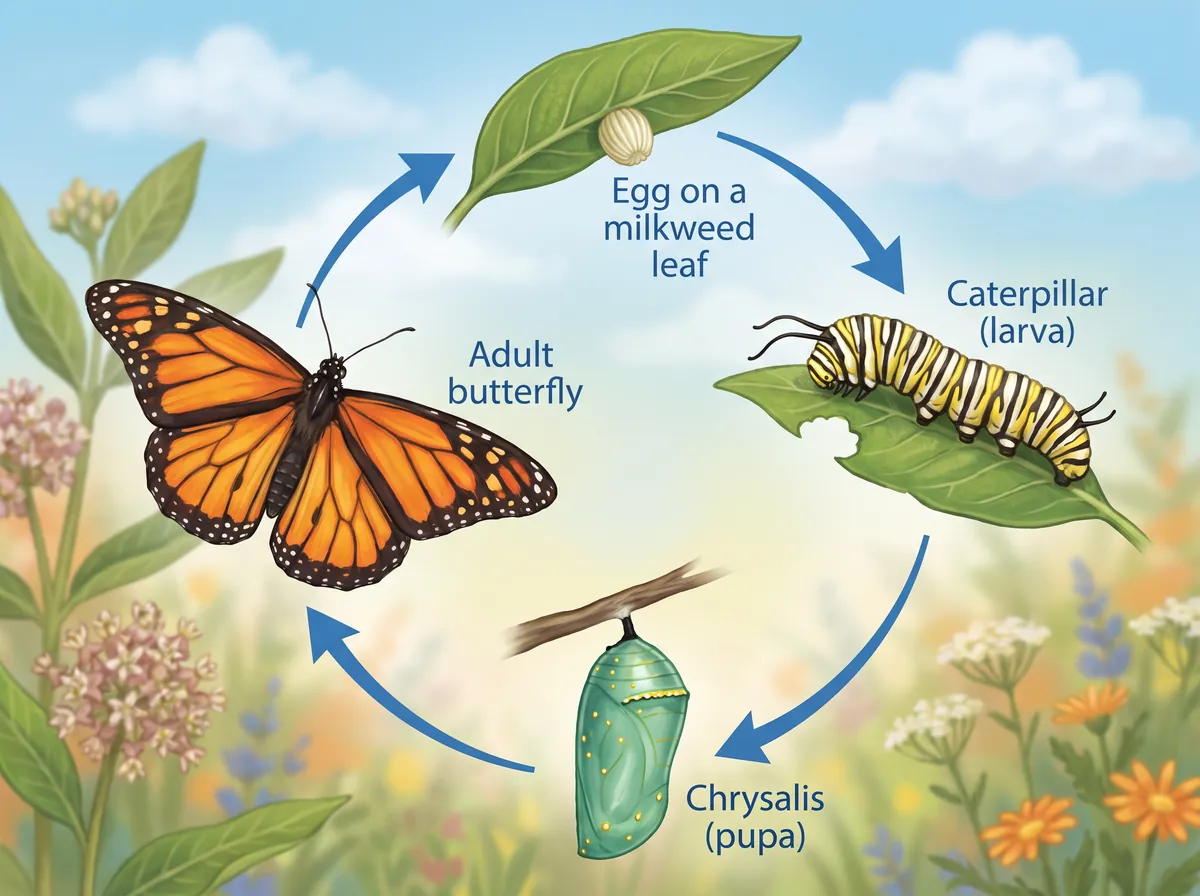
Prompt
The life cycle of a monarch butterfly for an elementary science lesson, arranged in a circle with arrows: Egg on a milkweed leaf, Caterpillar (larva), Chrysalis (pupa) and Adult butterfly. One clear label per stage, each appearing exactly once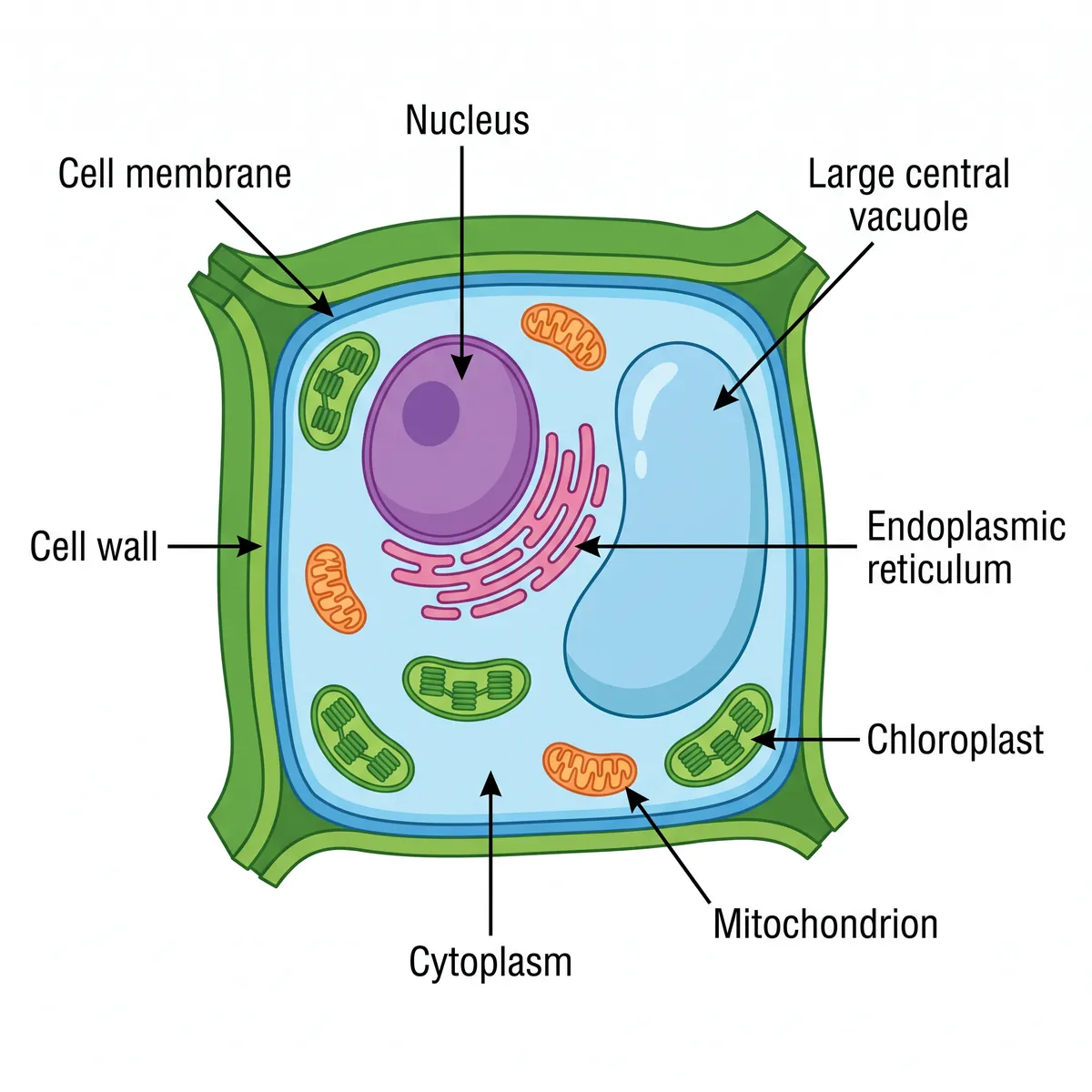
Prompt
A labeled plant cell for a middle school life science lesson, with leader lines to: Cell wall, Cell membrane, Cytoplasm, Nucleus, Large central vacuole, Chloroplast, Mitochondrion and Endoplasmic reticulum. Each label appears exactly once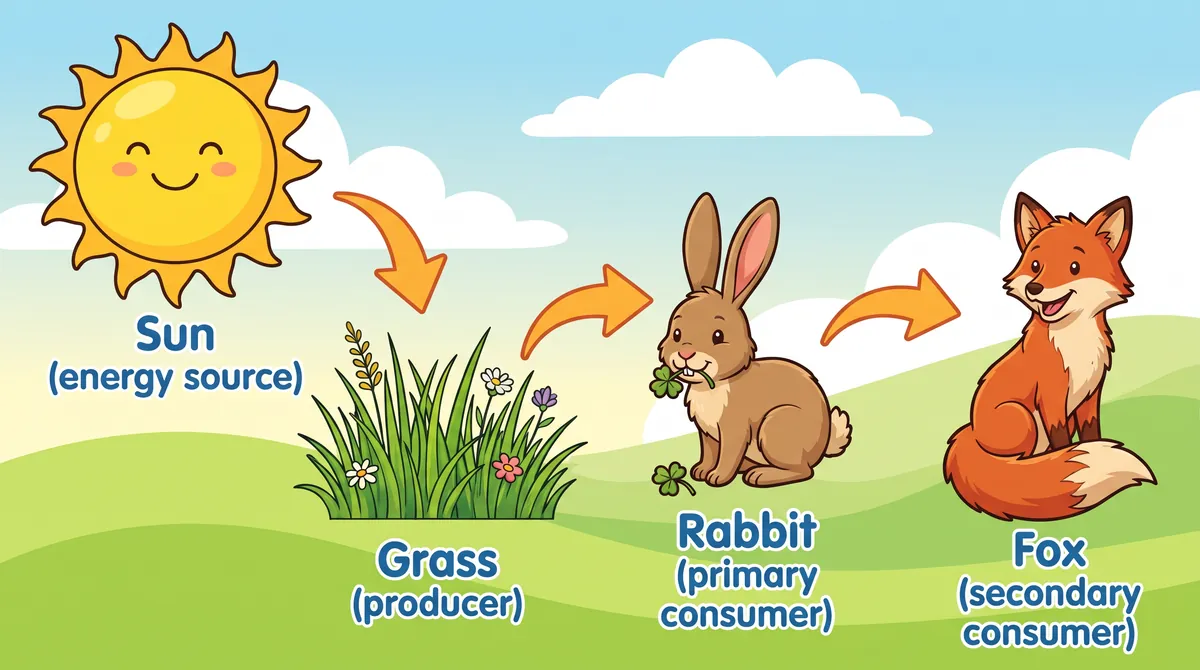
Prompt
A simple food chain for an elementary science lesson, left to right: the Sun, grass, a rabbit and a fox, with an arrow from each one to the next showing the direction energy moves. Labels under each: Sun (energy source), Grass (producer), Rabbit (primary consumer), Fox (secondary consumer). Each label appears exactly onceHow it works
Describe the concept
Name the topic, audience, and structures or sequence to show.
Choose a style
Try a textbook, diagram, illustrated, or higher-ed style.
Check and export
Review the draft against a trusted source; revise the prompt if needed before exporting.
What biology topics can I ask for?
Try a cell, life cycle, food chain, body system, or photosynthesis. Specify the parts and relationships relevant to your lesson; check the generated result.
Will every label be correct?
No. AI-generated labels, spelling, and relationships can be incorrect or missing. Review the image against a trusted source, and adjust the description and regenerate if needed.
Can I adjust the level of detail?
Include the grade level and desired detail in your prompt and choose a style. Review the result for your students; the requested level is not guaranteed.
Can I use the image in class materials?
Export an image for a slide, handout, or study guide after checking it for accuracy and readability.